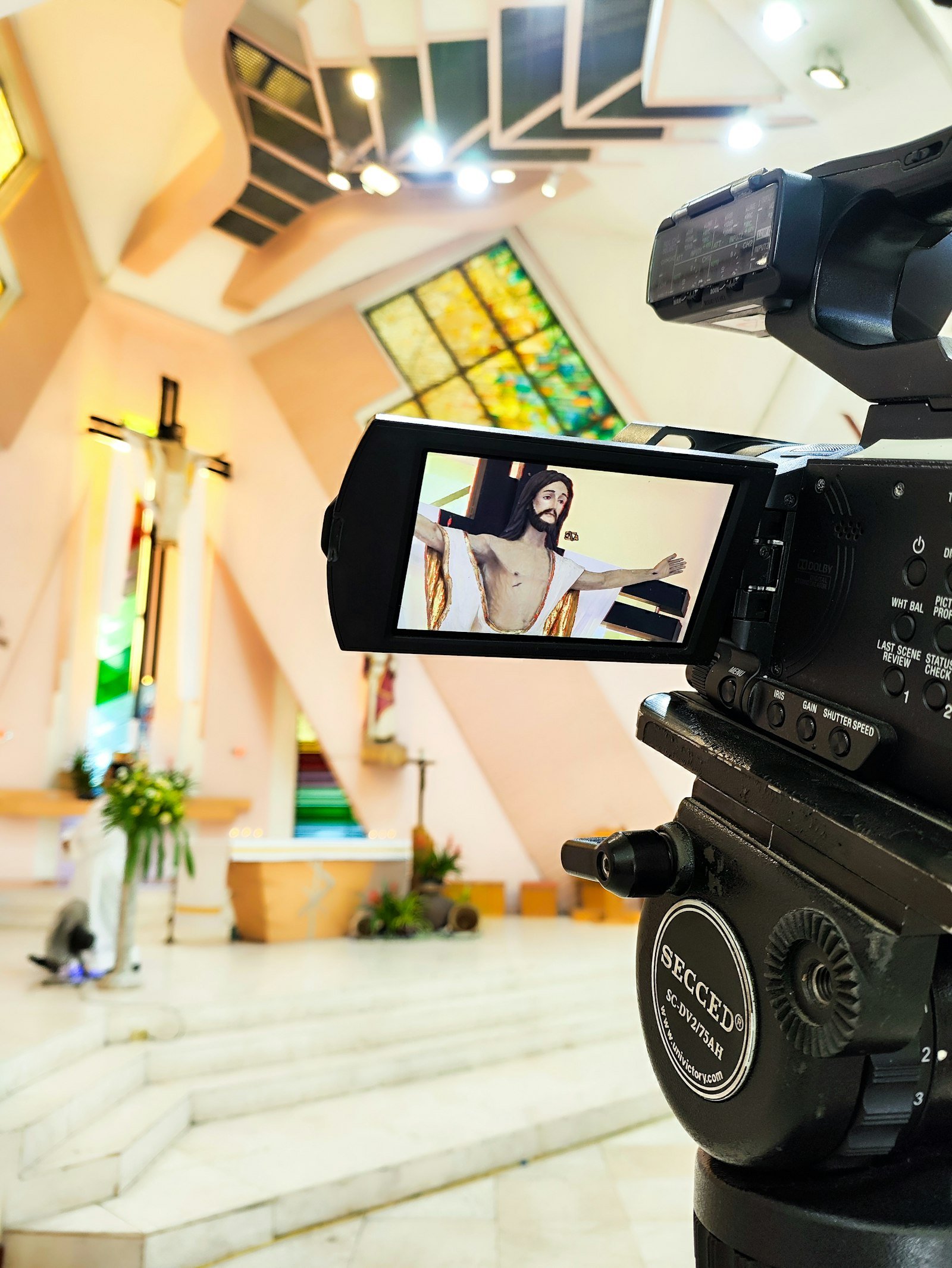
It's 8:55 on a Sunday morning. Your tech volunteer taps “Go Live” on the church Facebook Page, props the phone on a tripod at the back, and the service begins. Somewhere in Dubai, a member who has not sat in your pews for three years is refreshing her feed, hoping to catch it. She misses the first twenty minutes because the post never showed up in her feed. On Monday, an elderly couple who were sick and stayed home ask the church secretary for “that video” — and nobody can find it, because it's now buried under four announcement posts and a birthday greeting. The livestream happened. Almost nobody it was meant for actually watched it.
A Livestream That Only Lives on Facebook Isn't Really Available
Most Philippine churches that stream do it entirely inside a Facebook Page, and it's easy to see why: it's free, everyone already has the app, and going live takes one tap. But Facebook was never built to be your church's archive. What you get instead is a stream that only reaches whoever the algorithm decides to notify, a replay that sinks down the timeline within days, and a page where a first-time visitor has no idea whether you even have a service online, much less when it starts. Add the usual Sunday problems — a stream that dies mid-sermon when the data signal dips, audio picked up by a phone mic three rows behind a speaker, a volunteer who's absent so nobody goes live at all — and the whole thing quietly becomes unreliable. Members stop checking. And once they stop checking, they stop coming back to look.
Who You're Really Streaming For
It helps to name the people on the other side of that camera, because they are rarely the ones already sitting in the pews. There's the OFW in Riyadh or Hong Kong who tunes in at odd hours because your service is the one place that still sounds like home. There's the lola whose knees can no longer manage the jeepney ride, and the young mother with a newborn who won't be out of the house for another two months. There's the family in the province that moved away but never really left. And there are the Sundays nobody plans for — a typhoon, a flooded street, a class-suspension weekend — when your stream becomes the entire gathering. For all of them, the question isn't whether your church streams. It's whether they can find it without hunting, and watch it later without asking someone for a link.
How to Set Up a Livestream Your Members Can Rely On
You don't need a broadcast studio or a five-figure budget. What you need is a predictable place to watch and a setup that doesn't depend on one person remembering everything. Here's a practical path most churches can walk in stages:
- Give the stream a permanent home on your website. One page — yourchurch.org/live — that always shows this week's service, embedded straight from Facebook or YouTube. Members bookmark it once and never hunt again. That page becomes the backbone of a church website that works like your front door.
- Fix the audio before you upgrade the video. People forgive a grainy picture; they close the tab on muffled preaching. Plugging your stream into the sound system your church already uses is usually the single biggest improvement you can make.
- Keep a searchable archive of past services. A simple sermon list on your site — date, title, passage, speaker — means a member who missed August can still watch it in October, and a visitor can hear your pastor before they ever walk in.
- Put the giving link right beside the video. Someone watching from abroad has no offering basket to reach for. A visible GCash, Maya, or bank option turns a viewer into a participant — the same reason we walked through how churches can receive tithes and offerings online.
- Write down the Sunday routine. A one-page checklist — plug in here, start at this time, use this title, post the link here afterward — so the stream still happens when your usual volunteer is out of town.
- Announce it where people already are. Keep posting the link on Facebook and your Viber groups, but point every post back to the same page on your site. Social media brings people in; your website keeps them.
Start with the first two. A dedicated live page and clear audio will do more for your reach this month than any camera purchase, and both are within reach of a church running on volunteers. The point of all this isn't to build a slicker production — it's to make sure the people who can't be in the room on Sunday are still genuinely part of the gathering, and that a sermon preached once can keep serving your congregation long after Sunday ends. If setting up the live page, the sermon archive, and the giving links sounds like more than your team can take on, that's the part we're glad to carry: we help Philippine churches and ministries build the websites and digital tools that keep their people connected — near, far, and in between.
Talk to Us About Your Church Livestream Page →